Posted by Sasha Bell
The Sleep Sanctuary

In this article
The wash is the easy part to schedule. It is the drying that can take over your afternoon. Before a duvet goes into water, make sure you have both a suitable washer and a way to dry the filling completely.
Three checks before you start
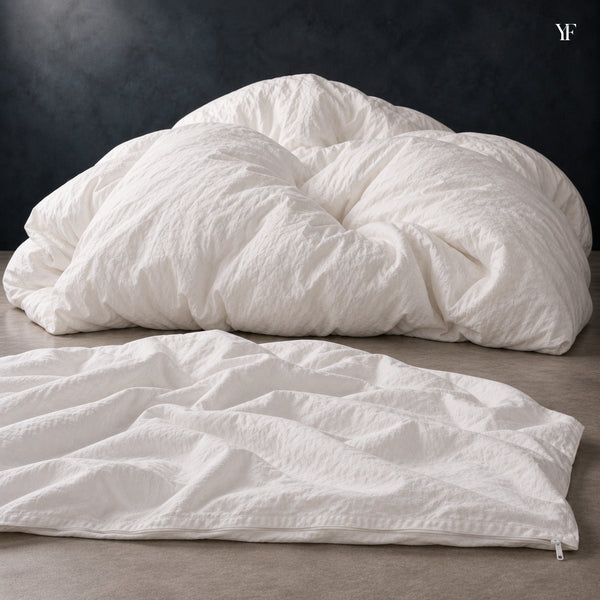
- Remove the cover. The empty cover and filled insert are separate laundry jobs. Open the duvet out and inspect the shell for loose stitching or an opening in a seam. Resolve damage before washing.
- Check the appliance instructions. A machine-washable duvet still needs a drum and load allowance suitable for its size. If you must force it in or it cannot move freely, use a suitable larger machine. Check the dryer too.
- Leave the bed out of the deadline. Have spare bedding ready if needed. A duvet that has not dried completely should not go back into its cover just because it is bedtime.
Maytag’s comforter guide also starts with the care label and enough room for the load. Its general cycle suggestions do not replace YumeFeel’s product instructions. Different fillings and fabrics can require different treatment.

Book the dryer in your plan before the washer
A duvet that fits the washer can still be an unsuitable dryer load. Check the two machines separately before starting. You are planning a complete wash and dry, not just finding somewhere to get the fabric wet.

Keep the care-label photo and duvet dimensions with you. A “large” sign or a door that shuts is not confirmation of suitability. If the equipment instructions and the bedding label cannot both be followed, ask the operator or maker for another option before wetting the duvet.
Wash for the filling you have
| Insert | Detergent and wash | What to avoid |
|---|---|---|
| Heaven or Air | Mild down wash; gentle cycle; extra rinse | Bleach, fabric softener and high heat |
| Royal Goose Down | Mild down wash; cold, gentle; rinse thoroughly | Bleach, fabric softener and high heat |
How to wash a down comforter (duvet insert) like ours: keep it in its cover day to day and wash it only when needed. Follow the care label, choose a gentle cycle with a mild down wash and an extra rinse, then tumble dry low until it is completely dry. Use the detergent dose suited to its concentration, the load and your machine. More soap is not a better clean if it stays in the filling. Wash the insert on its own, and support the wet duvet as you move it instead of lifting its full weight by one corner.
Dry it in stages, then check it cooled
Tumble on low with clean dryer balls in a suitable dryer. Pause periodically to reposition the duvet and gently loosen bunched areas. YumeFeel suggests checks at roughly 30-minute intervals; that is a reminder to inspect, not a promise that one more interval will finish the job.
Let the duvet cool before the final check. If any area remains damp, continue the permitted drying process. A cool or heavy patch deserves another look, but touch alone is not proof of dryness. Avoid a universal timer: residual water, filling, size and the dryer all affect the result. Do not raise the heat to hurry it along.
Make the next wash less of a project
Keep the removable cover clean and wash the insert when use, spills or its label call for it. A cover does not make the filling maintenance free, and an arbitrary weekly insert wash adds work you may not need.


If drying leaves lumps, use the clumping checklist before starting another wash. For the everyday routine across covers, sheets and pillows, keep our YumeFeel care guide handy.