Posted by Noel Fraser
The Sleep Sanctuary

In this article
The hotel bed you remember is usually a combination: a full sleeping layer, enough fabric around the mattress, carefully arranged pillows and someone taking time to reset it. Buying a duvet labelled “hotel” does not reproduce all of that by itself.
At home, work on three things: the duvet's underlying shape, its proportions on the bed and the way you arrange the outer layers. Choose the warmth for your room first. A bed should be inviting to sleep in, not only impressive when photographed.
A real hotel example shows why the whole bed matters
Westin's official Hotel Bed & Bedding Set lists a duvet, duvet cover, signature blanket, sheets and pillows as separate parts of the experience. It is a useful example of layering, not evidence that every hotel uses the same filling or arrangement. Our Westin and YumeFeel duvet comparison looks at the specific filled pieces, their contents and dimensions.
Start with the part of the room you want to bring home. If it is the bed’s generous shape, look at the duvet’s fullness and the fabric falling beside the mattress. If it is the finished look, notice how the pillowcases, cover and headboard work together. If it is the pleasure of getting into bed, consider the surface against your skin and the warmth underneath. Use a favourite hotel room or saved bedroom photograph to identify those choices, then build on the bed and furniture you already own.
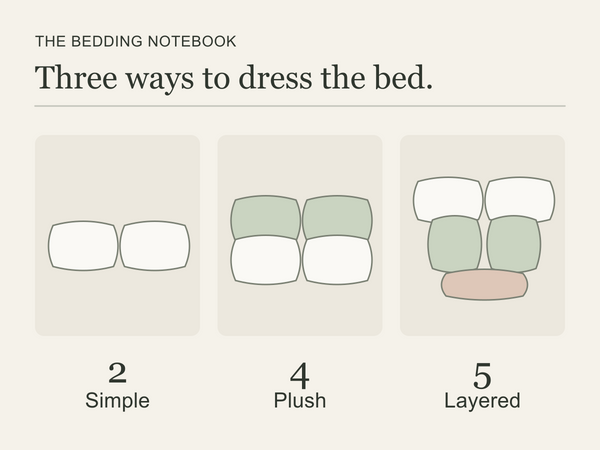
Pillows: height
Pillows: balance
Duvet + fitted cover: fullness and drape
Optional throw: colour or texture
Start with fullness you will enjoy underneath
A thin insert will still be relatively thin inside an expensive cover. Filling and construction create the underlying volume. Cover fit and bed-making shape how you see it; they cannot manufacture filling that is not there.
YumeFeel Cloud Heaven Duvet is built for a substantial, billowing bed: 3.5 kg of the airiest 100% Canadian down in our patented Cloud Shell, which gives the down room to rise so the duvet stays tall and full of air. PureFlow Air Duvet is 1.75 kg of 100% Canadian down, light as air, airy and light on top of you. If you run warm, Air may make the better bed to sleep in even though Heaven creates a more dramatic silhouette.
Royal Goose Down Duvet is our rarest: Canadian Hutterite white goose down at 900+ fill power. Choose 7.5 TOG Lightweight or 12 TOG All Season to suit the warmth you want. All three sit in a PureFlow 300T shell, soft and cool to the touch, and each is signed with a YF monogram in crystals, set by hand by our artisans.
Let the sides belong to the whole bed
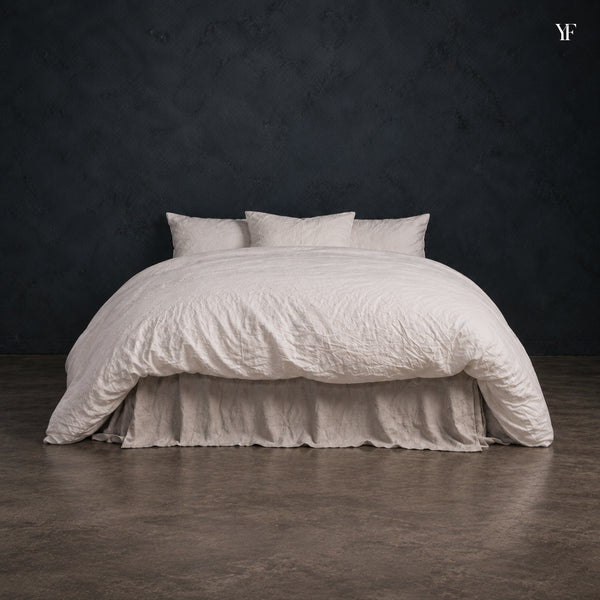
A duvet that barely covers the mattress top can look undersized. Measure the mattress width and depth, then check the duvet's width. On a 60-inch Queen mattress, a 96-inch duvet has 18 inches of flat allowance on each side before drape and loft use some of that fabric.

A larger cut is not always an improvement. On a low frame, too much fabric may trail on the floor. On a tall mattress, the same cut can look quite different. Use the size guide to decide the drop you actually want.

Make the bed with fewer, better moves

Start with a fitted sheet pulled smooth, then centre the filled duvet inside its matching cover and settle the corners. Let the side edges hang freely so you can see the duvet’s shape. Stand the sleeping pillows against the headboard, or lay them flat for a lower, quieter outline. Fold the top of the duvet back once if you like the layered effect, then add one contrasting throw only if it contributes a colour or texture you want.
Step back before adding more pillows. Keep the arrangement you can reset comfortably each morning, with a chair or shelf available for any decorative layer removed at night. For a fuller walkthrough, YumeRest, our bedding journal, shows the routine with or without a top sheet.
Use colour to make the look your own
White is a clear starting point, but a softly striped cover or a small check can feel just as considered. Repeat one colour in the pillowcases or a nearby object rather than trying to match everything. A wooden bedside table and warm light keep a white bed from feeling stark.

Choose Heaven for a substantial, billowing bed, Royal for our rarest goose down, or Air, light as air. Once the sleeping layer feels right, use the YumeRest pattern guide to give the room your own character. The finished bed can feel considered and inviting without borrowing every detail from a hotel. To connect a white bed with the rest of your space, try our luxurious white-bedroom walkthrough for palette, texture, proportion and evening light.