Posted by Remy Stone
The Sleep Sanctuary

In this article
A duvet that looked full yesterday can look tired today for very different reasons. It may still be compressed from storage, trapped inside a tight cover, damp after washing, or genuinely losing its shape.
Take the cover off before you decide what has failed. An insert that looks full on its own needs a different fix from one with thin patches or hard lumps. The most useful clue is what changed just before you noticed the difference.
Follow the change, not the photograph

| When did it look flatter? | Your first check | A sensible next move |
|---|---|---|
| Straight out of the box or storage bag | Was it tightly compressed? | Give it space and use the maker’s unpacking routine. |
| Only after putting the cover on | Does the insert lie full and even outside it? | Check cover dimensions, orientation and attachments. |
| Immediately after laundering | Is the filling fully dry throughout? | Finish the permitted drying process before judging loft. |
| Gradually, or only in one area | Are seams intact? Is the filling still evenly distributed? | Document persistent changes and ask the maker for help. |
A lower profile can also be the design
Fullness starts with the quantity and type of filling and the way it is held in place. A summer duvet is not meant to acquire a winter duvet’s shape after a few shakes. Nor does down’s fill-power number tell you how much filling is in the whole duvet.
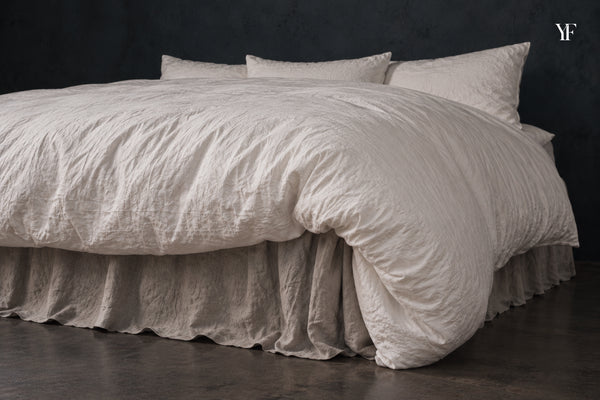
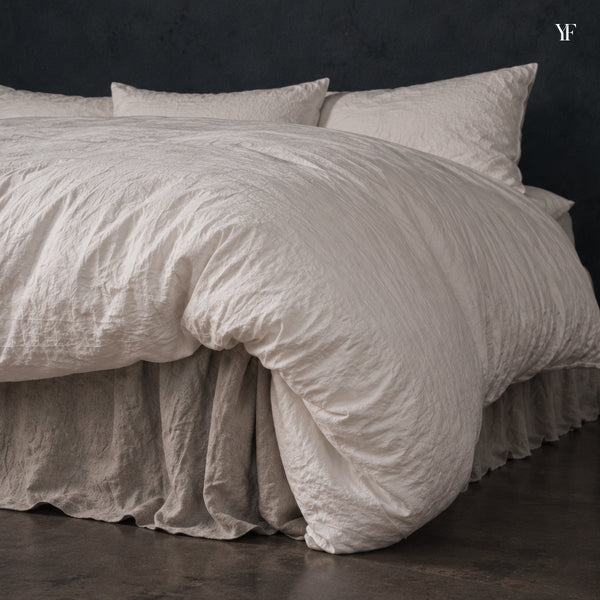
These are design roles, not a prediction of an exact height above the mattress. In both, the Cloud Shell gives the down room to rise and keeps it where you put it. Cover fit, placement and the way the bed is photographed also affect appearance. A low-profile Air duvet is not automatically a flattened Heaven duvet in need of repair.

Try a gentle reset
- Spread it out without its cover. Gently shake and settle it. For a newly unpacked Heaven or Air duvet, YumeFeel’s care guide allows 24 to 48 hours for expansion. For Royal Goose Down Duvet or another duvet, follow that product’s unpacking instructions.
- Check for a recent wash. If moisture may remain, follow the post-wash checks and finish drying according to the label. Do not store it compressed while damp.
- Use only the approved refresh. For a YumeFeel premium down duvet, follow the care label and keep the dryer on low. The appliance still needs room for the load. More heat is not the next level of the same treatment.
- Put it into a compatible cover. Seat the corners and connect the ties before judging the finished shape.
Avoid pulling aggressively at the shell or forcing filling through sewn compartments. Repeated washing is not a way to add more fill. Our fluffing guide covers the ordinary refresh in more detail.
Compare the same duvet in the same setup
A styled product photograph is a poor record of what changed in your own duvet. The camera angle, cover and folds can all change the outline. Before taking another action, give yourself a comparison that support can actually read.

- Keep the setup consistent: use the same bed, camera position, cover state and loose arrangement. Do not add a throw or a second insert for one photograph.
- Record the context: note the date and whether the duvet was just unpacked, recently washed, taken out of storage or given its normal label-approved refresh.
- Show both scales: an overall view reveals distribution; a close-up shows the particular seam, lump or thin area you are asking about.
A home photograph cannot establish a percentage of loft lost, certify dry filling or decide a warranty claim. Its job is to make an observed change easier to describe. If the uncovered insert remains even and comfortable, a different look in the made bed may be a cover or styling question rather than a reason to wash it again.
Know when to stop trying another cycle
A torn seam, a bare compartment or hard clumps that remain after appropriate care call for support. Take a photo of the insert laid flat, a close-up of the affected area and a note of the wash and dry settings. There is no one-second hand-press test that proves every comforter is worn out.
Heaven and Air’s 5 year Loft Promise covers flattening, clumping and fill drift under its terms, with assessment followed by restoration, refilling or replacement. Royal has its own warranty. If the duvet has always felt lighter than you wanted, compare loft, warmth and weight before buying a different one; that is a preference decision rather than a repair.